Naima Morelli

Archive
Italy

a1

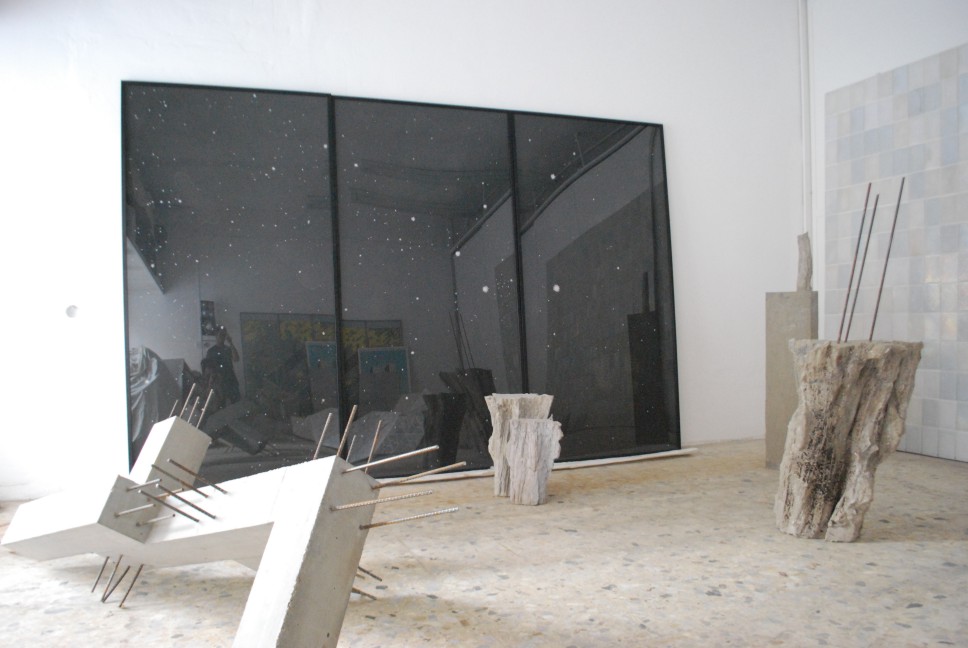
Walking into Stefano Canto’s studio feels like stepping on the moon. Tucked in a quiet area of Rome, Canto’s working space reflects his need for order and clarity.
The artist has a background in architecture and that comes off pretty clearly from many elements of his work, such as the relationship between solids and voids, the use of modular elements and the choice of materials to work with. In sculptures/installations like “Caedo (Opus Caementitium)” he creates evocative shapes by filling the bug-damaged interior of a tree with concrete.
As often happens in contemporary art, there are many ways to look at “Caedo (Opus Caementitium)” – for some absence becomes presence. For others the work is a comment on the damages of urbanisation – the pathogens attacking the tree trunk are indeed caused by smog and other similar substances. You can even look at these works as simple evocative shapes, reminiscent of the black obelisk-shaped object that Led Zeppelin featured on the cover of their seventh album ‘Presence’ (that’s actually my own take and when I told Stefano he looked at me like “what the hell are you talking about?) Well, my point is that there are so many layers to each work that you can fill a book – Stefano actually has an upcoming book with a few curatorial texts, so keep an eye on this guy -this is a studio visit though, so I’ll let the picture do the talk…
Read More

f1
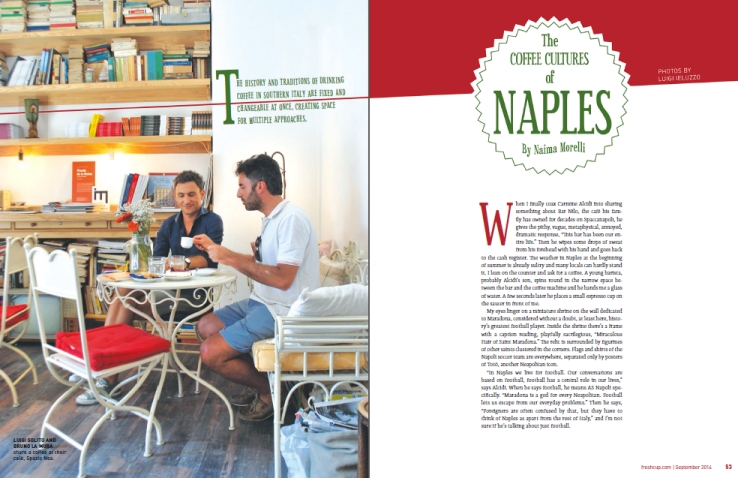
My article about  coffee cultures in Naples has just been published on the American magazine Fresh Cup. In this article I go back to my hometown Naples  interviewing three owners of different typologies of cafès, the historical Gambrinus, the typical Bar Nilo and the innovative Spazio Nea.

Here’s the link to the article on Fresh Cup website

Here you can order a copy of the magazine

Read More

a1
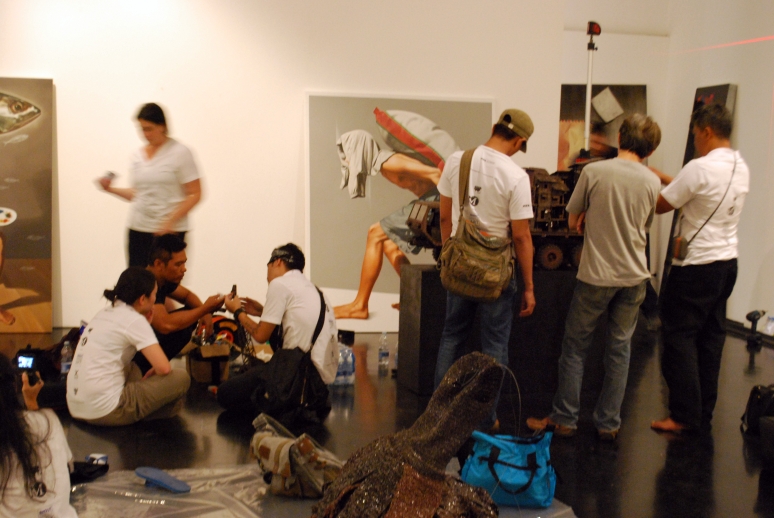
The new exhibition season in Rome is kicking off with a promising show entitled SHOUT! which will be held in MACRO from September – November 2014 in conjunction with the film festival Asiatica Film Mediale.
The show is curated by Singapore-based curator Santy Saptari and Bryan Collie, director of Melbourne’s MiFA Gallery and features artists Aditya Novali, Andita Purnama, Angki Purbandono Bestrizal Besta, Erika Ernawan, Gatot Pujiarto, Maria Indra Sari, Sigit Santoso, I Gusti Ngrurah Udiatara, Tantin, Yudi Sulisto and Gusmen Heriadi.
Yesterday I sneaked inside the MACRO to take some pictures of the artists setting up the show and have a chat with them. Here’s a preview of what you will see from the 26th of September:

Read More

blog2
Do you remember MSN? That fairly basic chat you used to spend hours on, chatting with your faraway summer friends during winter? Ten years ago MSN was one the first ways to keep all your “contacts” together.
Back then, my friend Enrico was very big on “contacts”. He was – and still is – a very friendly person who is comfortable with pretty much everyone. When he was thirteen the idea of having all his friends in one single place was to him the most exciting thing ever – right after Harry Potter I suppose. As for me, I used to considered other people being an annoyance most of the times – fictional people like Harry Potter included – so the fact that he was bragging about the number of his MSN’s contacts sounded funny to me. Fast forward to the Facebook era, my friend’s account is bursting at the seams, and so he periodically purges it – only to repent short time after and re-add his unfriended ones.

Today as a grown up girl I finally understand the importance of other people. I gave up my antisocial punk attitude and I started to appreciate talking and exchanging ideas with people big time. If I have to spot a precise time I decided cut on my misanthropy, I would say when I first encountered the Roman art world. At nineteen I was going to plenty of vernissages, often with my two best mates – “compagni d’arte” – and we were wondering about why all those caryatids, err, older people, didn’t want to talk with us. If you are not familiar with art openings in Italy, you should know that you seldom see younger people there. This was far from bothering me. I figured I just had to be more stylish, so I started wearing a little black dress, red lipstick and the right amount of boldness.

Read More

gdd6
Many moons ago, when was a graffiti artist in Rome, I was introduced to Roman rap music by my then-boyfriend, who used to wear annoying hip hop clothes and a very nice rapper hat. I didn’t know anything about rap back then. I grew up on punk rock and when came to the spoken word I couldn’t go farther than Patti Smith’s “Piss Factory” – which still hold the title the most moving songs about ambition and an aesthetic vision of life, if you ask me.

Anyway, at the time I was listening to all those people you probably never heard of unless you are from Rome and you wear annoying hip hop clothes. Corveleno was my favourite rap group, followed by Colle Der Fomento, Gente de Borgata and – here I have some reticence to admit it – Noyz Narcoz and Saga Er Secco. As bad as it sounds, my writing style in Italian was heavily influenced by that music. You should read my art reviews from that time on Art a Part of Cul(ure). Imagine reviewing Sandro Chia with this super aggressive attitude – which let’s be honest, the Transavanguardia deserves a little bit. Plus, those reviews were great fun to write. I remember a mail exchange with Art a Part of Cult(ure) director Barbara – who usually let me go away with everything – saying: “Don’t you think that passage is a little offensive?” Offensive was a nice way to describe that passage.

Read More

live1
I remember one beautiful evening few years ago in Rome. I was walking with my new friend Francesco, a mime just met at Cinema Trevi. Quite strangely for a mime, he was a chatterbox. I thought that was because he couldn’t talk on stage, so that was his way to vent. Since I just came back from an opening at Gagosian gallery, I was wearing red lipstick, a little back dress and red shoes. Francesco and I keep on whirling in the street paved with cobblestones and he said: “You know what the beauty of life is? That you can live wherever you want. You just have to choose a city, and you can move there anytime.” Then he went on telling me about when he was my age – twenty-one at the time – and he moved to Spain by himself. He was working in a bar near the beach, studying as an actor at the same time. He also told me about that time that he saved a girl abused by a group of guys – an anecdote he clearly unsheathed to impress me. Aside from that, the beautiful thing about Francesco was his constant excitement and exaggerated optimism. He could have been banal and cliché in his representation of happiness, fancying sunsets on the beach and the like, but he was still infusing me merriness and even a little inspiration.

Over the years I kept on asking myself: Is that true? Can you really pick a city you like and decide to move there on the whim?

Read More

1ff

There is a mesmerizing Patti Smith’s song I used to listen to when I was in my teens. It’s called “Land” and tells – in a very surreal way – the story of this guy called Johnny. Since the chord progression wasn’t too complicatedly, I quickly learned to play it on the guitar. There was a particular line that made me pretty excited when I sang it. It was “I hold the key to the sea of possibilities”.

When I was seventeen I had a number of small abilities, but very little how-to knowledge.
My guitar practice alone branched off into my folk Neapolitan repertoire, my intimate Carla Bruni-like songs and my love for punk rock. These three aesthetics were not conflicting to me. That was confirmed by reading on a magazine that Norah Jones also had a punk band. I thought, if she does it, why I shouldn’t? (Well, if you have ever heard me singing and playing, the answer is pretty straightforward).

Way before I would learn the position for a E chord, I was making been comic books. Since I was born, I have never stopped drawing and creating stories. As often happens, I started making comic books since I was in high school and my school mates were my first readers. Never in my life I considered to stop that. Then of course, there was the writing. I was that annoying kid asked by the teacher to stand up and read her essay out loud. I didn’t really like to do that, mostly because my pulp Tarantino-confronts-Romero-on-the-theme-of-abortion like essays were meant to be read with a little verve. Which I completely lacked of . Anyways, at eighteen I started writing for an art magazine and a number of rock and general publications. Around the same time, I started covering every blank spot I could find in the city with graffiti. Man, that was real fun!

Read More

red2

When people ask me about my routine, what I can say is that it is constantly changing. After an intense July, I’m finally back in uneventful Sorrento, Italy, and I couldn’t be happier about it. In sultry Rome I was super-busy setting up the screening of Indonesian video art, so I wasn’t really able to keep a routine, which was good. In fact, my modus operandi entails intense and exciting weeks, followed by weeks of just concentrating getting the “offstage” work done. Which means a solid 8 hours a day. Then I grow restless and I leave for the next adventure. I also like the idea that thanks to the internet you can work remotely to your next mission. There is something inherently powerful in working from a remote costal town in Italy, contacting artists and magazines from all over the world. So that’s how an ideal July-August workday looks like for me (if I manage to retain myself from playing guitar all day)

Read More

indo1

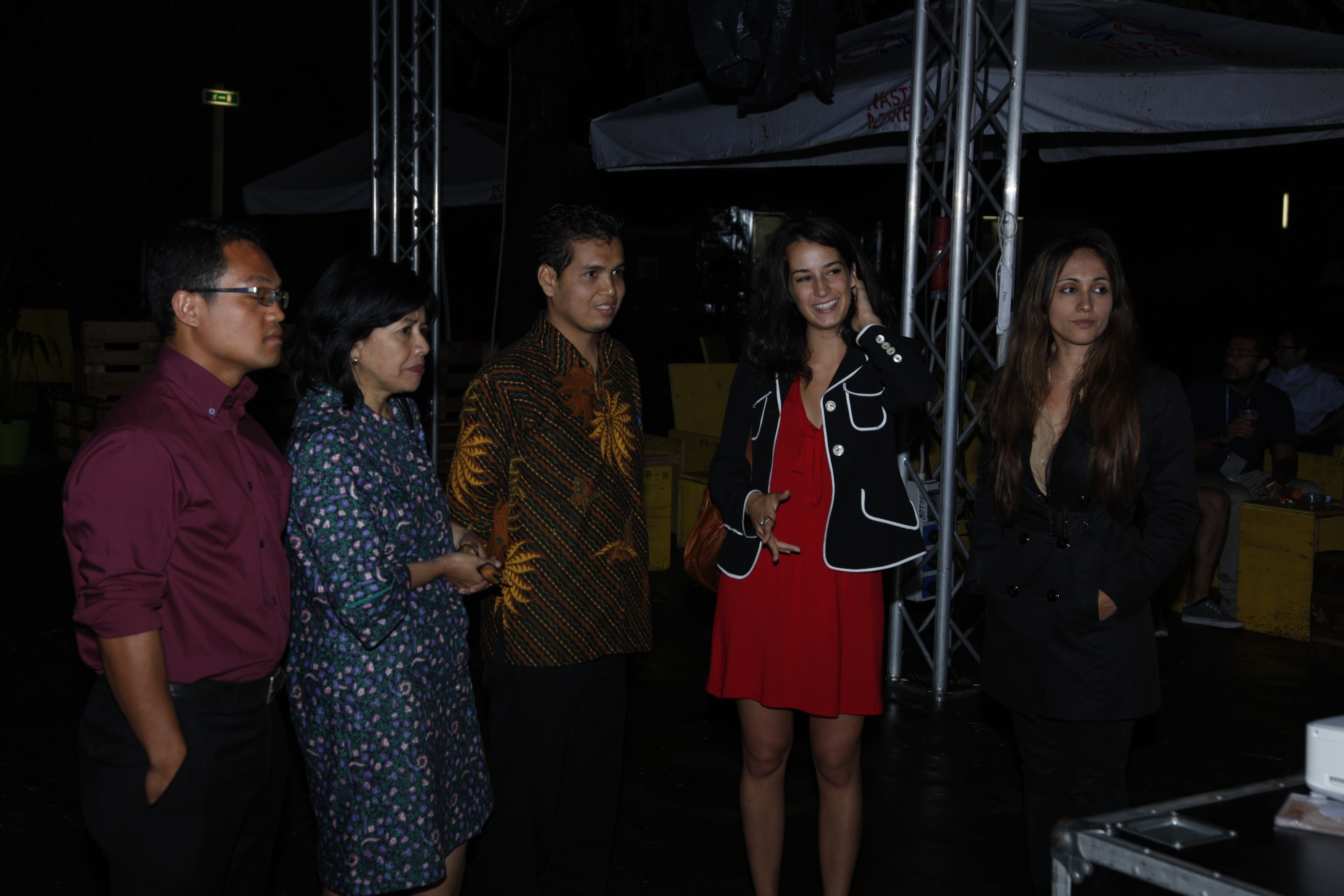
On July 18, right after an unexpected rain in Rome, we held a private screening of “Indonesia – Orienti, Visioni Contemporanee” for three members of the Embassy of the Republic of Indonesia in Italy. MNAO Contemporary’s Chief Curator Valentina Levy and I had an informal chat with Counsellor Nindarsari Utomo and Third Secretary Tinus Zainal. We discussed the difficulty to keep alive tradition in relation of Krisna Murti’s “Empty Theather”. We also dwelt on the value of documentation and national identity with Tintin Wulia’s video and we observed how the young generations of Italians can easily relate to SlavePianos and Punkasila’s work. The Embassy of the Republic of Indonesia in Italy is constantly promoting cultural events across the two countries, and it has been great to see how visual art can be part of that. Here a couple of pictures!

Read More

6

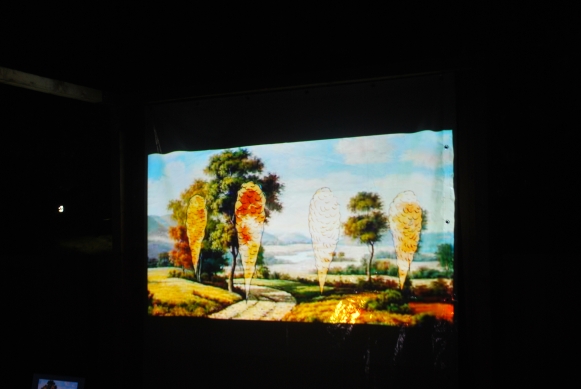
At the beginning of 2012 I started making research about Indonesian contemporary art and now I’m excited to had the chance to introduce some of these amazing artists to an Italian public through “Indonesia – Orienti Visioni Contemporanee” , a series of screening of video art in Villa Ada’s Art Project Space.
For this screening, part of MNAO Contemporary program, I wanted to show three completely different approaches to video art, presenting new-media pioneers Krisna Murti and Tintin Wulia, and the most irreverent bunch of punks in the whole Asia-Pacific, namely Punkasila and Slave Pianos.
Despite the title of the program, I tried to steer away from any kind of representation of “Indonesianess”. Krisna Murti makes an aesthetically mesmerizing observation on traditions slowly fading away. On the other hand, Tintin Wulia’s way of working goes beyond her nationality, in fact she works around the concept of nation and national boundaries itself. Punkasila and Slave Pianos, joining forces just like a crossover from some comic book, give space to their wildest fantasies, imagining an alien invasion starting from Java.
So, here a preview of what you will see this week if you happen to pass by the Art Project Space in Villa Ada.

Read More

PosterIndonesiaVillaAda

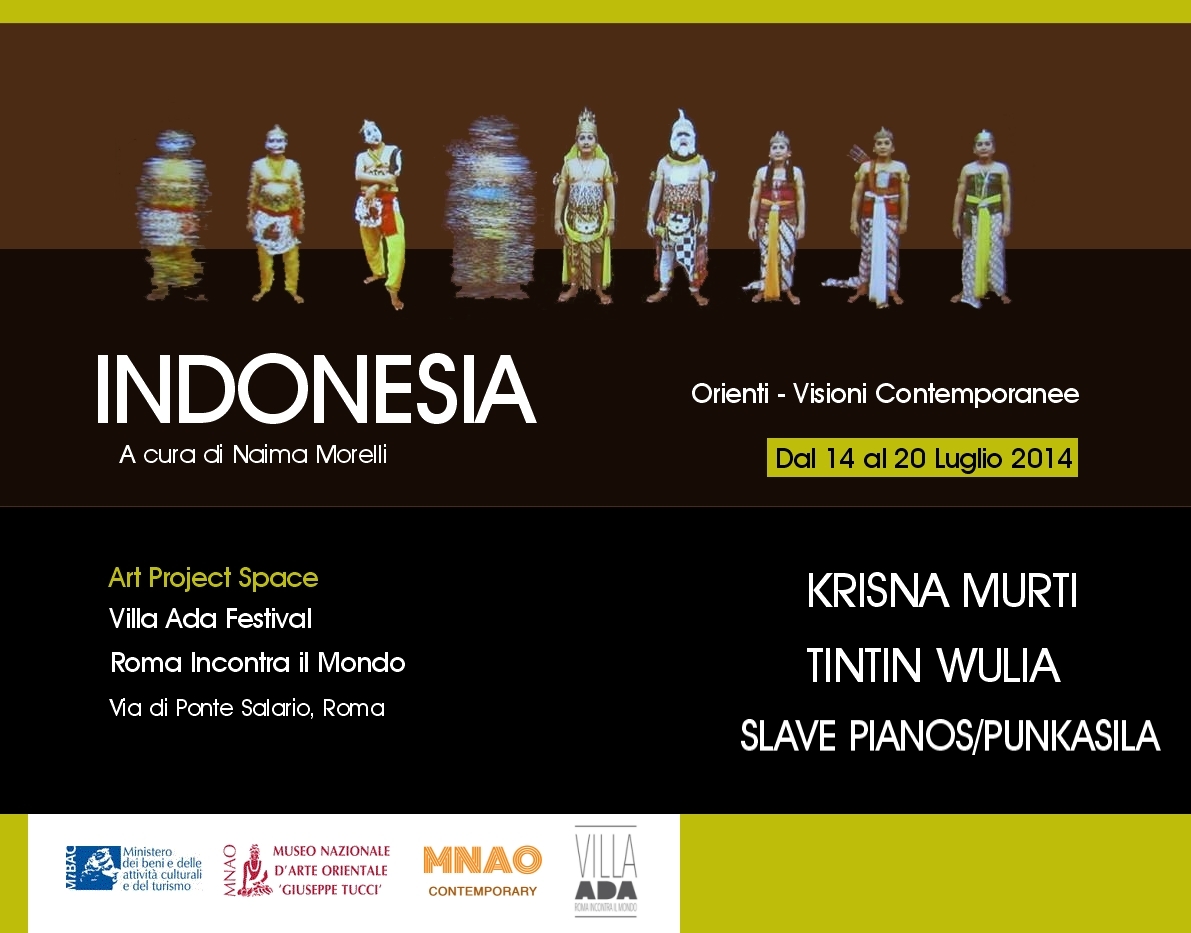
Dal 14 al 2o Luglio curerò una rassegna di video arte indonesiana nell’ambito del Festival di Villa Ada. L’iniziativa è stata organizzata da MNAO Contemporary, il programma di arte contemporanea del Museo Nazionale d’Arte Orientale Giuseppe Tucci di Roma, e si focalizza su diversi paesi asiatici. L’inaugurazione è domani sera dalle 9 in poi… intanto beccatevi il comunicato!

Villa Ada Festival Roma Incontra il Mondo presenta…

“ORIENTI – VISIONI CONTEMPORANEE”
Programma di video-proiezioni ed installazioni di artisti contemporanei asiatici diretto da Valentina Gioia Levy, con la collaborazione di Elena Abbiatici e Naima Morelli

Presso l’Art Project Space
Adagio Bar
A partire dal 4 luglio
INDONESIA 14 – 20 Luglio

A cura di Naima Morelli
14 – Presentazione scena artistica indonesiana e introduzione al lavoro dei tre artisti in mostra.

15/16 – Krisna Murti – Empty Theather – Video installation (multi-channel video), DVD 3 projections, 3’58’’, loop, sound, 2010.

17/18 – Fallen –Tintin Wulia – Video projection (single-channel), 18’43”, loop, 2011

19/20 – The Lepidopters – Slave Pianos and Punkasila – Video projection (single-channel), loop, 2014
Proiezioni dalle 21 in poi
Per la settimana dedicata all’Indonesia verranno proiettati tre video che rappresentano alcune sfaccettature della complessa e variegata scena artistica locale in rapido sviluppo.
Krisna Murti e Tintin Wulia sono pionieri della video arte in Indonesia. Entrambi cominciano a lavorare con i new media all’alba della caduta del regime del dittatore Suharto nel ’98, in un clima di libertà espressiva fino a quel momento negato.
Punkasila invece è un gruppo artistico nato a Yogyakarta nel 2007 da una residenza all’Indonesian Visual Art Archive, allora Yayasan Seni Cemeti, di Danius Kesminas. Il gruppo originale di Punkasila conta sette giovani artisti indonesiani più Kesminas, ma è costantemente in espansione e aperto a nuove collaborazioni, tra cui quella con Slave Pianos per questo video.

Read More

glory1

When it comes to creative jobs in general – and jobs in contemporary art in particular – the word “work” often assumes nuanced meanings.
After all work is not supposed to be fun. It has to be a daily ordeal, something that drains off your love for life, fades the colours around you and makes food tasteless.
Well, I think that today, more than ever, that is simply not true.
If you are into Brain Pickings, TED Talks, School of Life & similaria just like I am – and you probably are since you stumbled on this blog – you listen to people spurring you to make a business out of your passion every day. Nothing seems to be impossible in the era of internet. The sheer fact of owning a computer opens up a myriad of resources and possibilities.

Yet once again I hear people in contemporary art industry saying “Obviously with this project we are not interested in making any profit. We are doing that for the glory.” What followed is usually a resigned nodding: “That’s the way it is.”
The glory? What the hell, I thought, we are talking of contemporary art! If you are in for the glory, you better choose something a little more mainstream. Contemporary art gave fame and glory to very few people. The majority of these people are just a handful of artists, the rest are Hans Ulrich Obrist and Achille Bonito Oliva. Full stop. You may worship Palma Bucarelli (the late charming director of Rome’s National Gallery from 1942 al 1975) just like I do. But you also have to acknowledge that she’s pretty niche. Niche to the point she doesn’t even have a Wikipedia page in English. The best part is that I don’t think she would care about having a Wikipedia page either. She was not in for the glory; working in a museum was her job and it was a real respectable job, the kind that pays the bills – and in her case all those glamorous dresses as well.

Read More