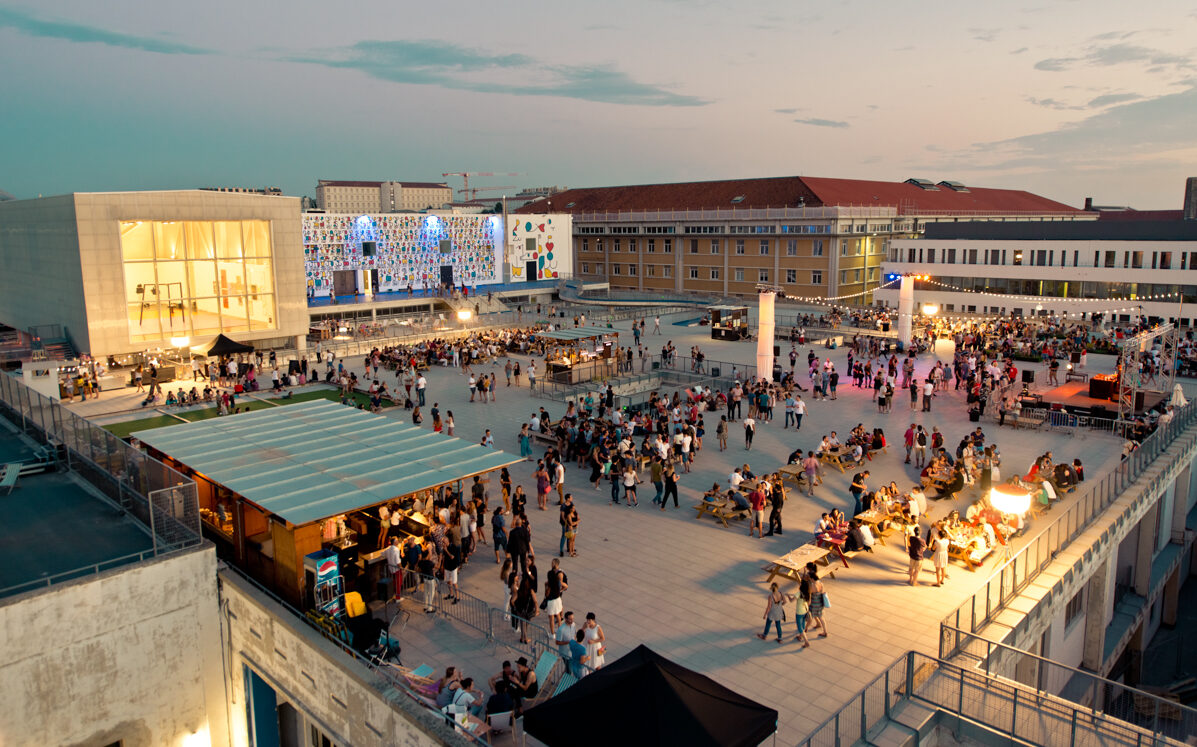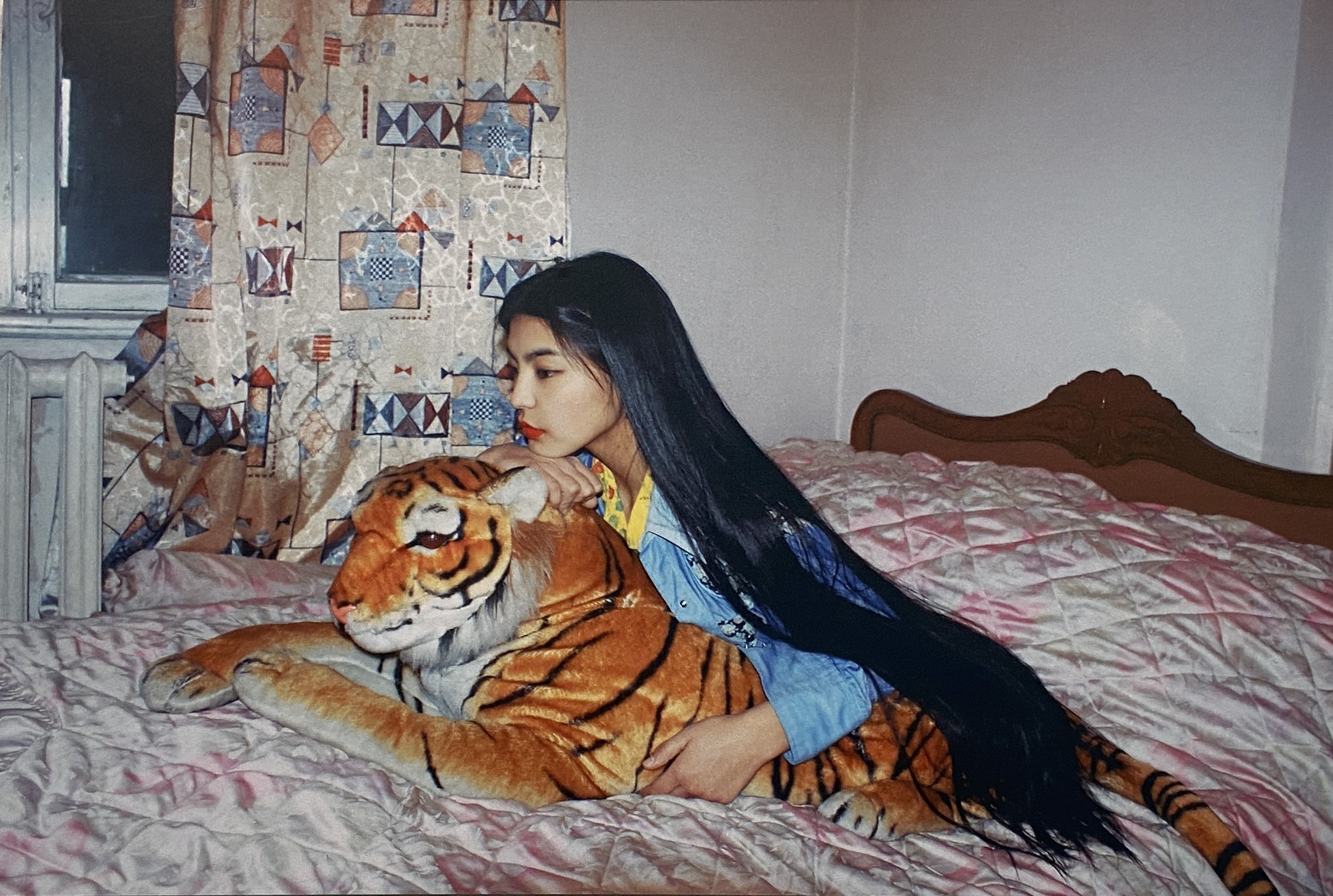
421 contradicts several preconceived ideas the West might hold about the UAE art scene, often associated with large institutions projecting national ambition outward, from the Louvre Abu Dhabi and the forthcoming Guggenheim to the Sharjah Biennial. Taking another approach, 421 operates on a smaller scale, with slower timing and direct relationships with artists.
I visited 421 Art Campus and reported for ArtAsiaPacific.
My piece about the Singapore art week was published by Observer. The consolidation highlights the tension between scale and specificity of the fairs Art SG and SEA Focus, prompting questions about how regional narratives can retain clarity and resonance in an increasingly globalized marketplace.
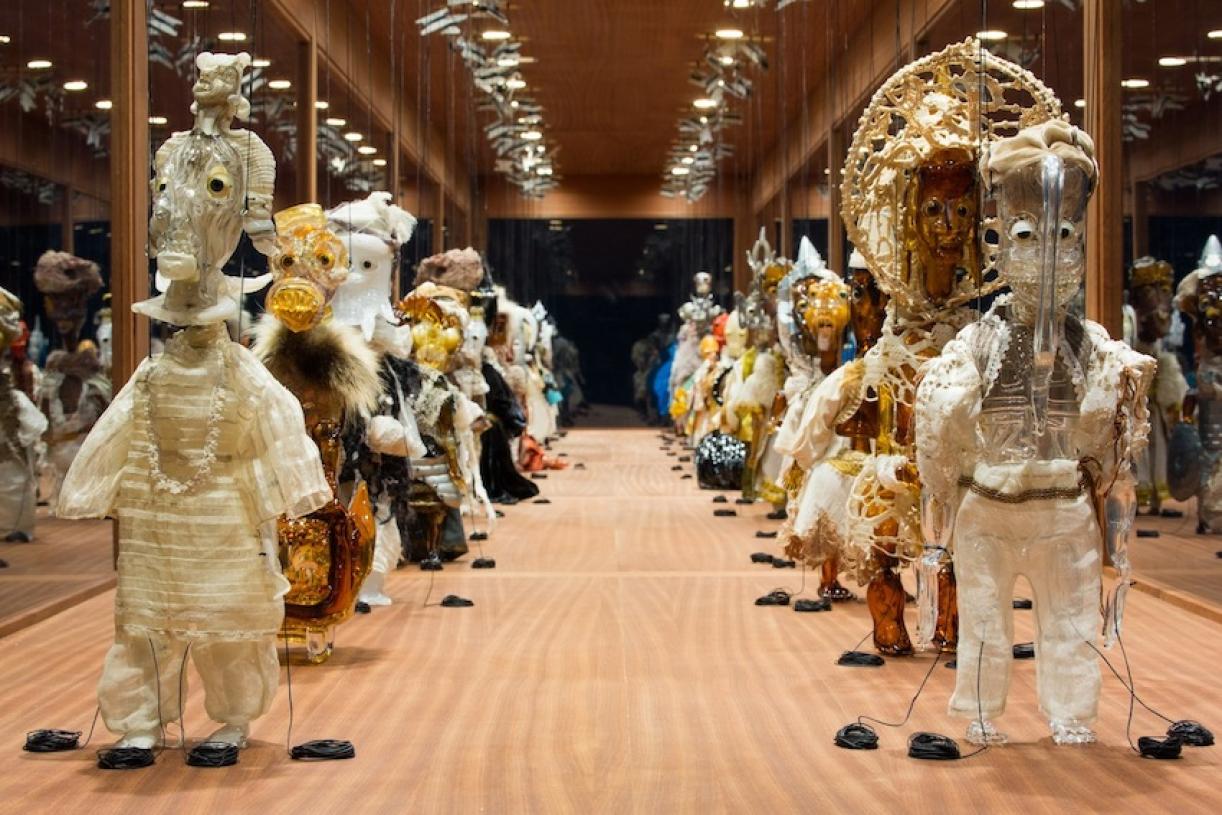
I have written the curatorial text for the exhibition, Hidden in the Jungle, from 6 January to 6 February 2026, by artist Inessa Kalabekova at Fullerton Hotel.
I had the pleasure of following the evolution of Kalabekova’s work for many years now, visiting her studio in Singapore and contributing curatorial texts to her shows
Below is my curatorial text called “Restoring the Ancestral“
I’m starting to type this review at Café Metcha in Seoul, and I’m finishing it at Bar Veneruso in Sorrento. In other words, I’m starting it in a place where I’m very far from my former self, spearheaded into future me, and I’m finishing by penning it down in my hometown. It feels like reconnecting the two halves.
As every
year, I choose a double theme for 2025, namely two words that work in tandem,
as two synergistic aspects I wanted to embody throughout the year. It was
supposed to be Sturdy/Shameless, but it ended up becoming more
Nomadism/Community.
I wrote a piece for ArtAsiaPacific on the Parisian art fair AsiaNow. What clearly emerges from the fair, is how the economic dynamism of the Middle East is fostering new connections between the Gulf and other thriving art scenes, from Korea to Southeast Asia.
The art world came to Turkey in September for two high-profile events: Contemporary Istanbul and the 18th Istanbul Biennial. Against a backdrop of political crisis and growing censorship, organisers and artists found creative ways to stay relevant. I wrote the article for Qantara.
Private collections and individual visionaries are driving Kazakhstan’s cultural renaissance in the absence of major state investment. I wrote the story for the Observer.
My latest story for Times of Central Asia, is about the inauguration of the Almaty Museum of Arts, which represents a decisive step in shaping Kazakhstan’s art system.
As the country’s first large-scale contemporary art museum, it houses over 700 works collected across three decades, offering a panoramic view of modern Kazakh art while opening pathways to Central Asian and international dialogues.
Together, shows staged by the DEO Foundation and Perasma underscore how art can take root in unexpected places, drawing visitors beyond the well-worn circuits of cultural tourism. I wrote the piece for the Observer.
Are we watching or being watched? Ali Cherri’s new show in Marseille, on view through the 4th of January 2026, deconstructs the museum from the inside out. I wrote the article for The Markaz Review.
New article (originally in Italian, but you also have an English version) about a city which I recently visited, Helsinki. Here is my very personal guide for IFDM.
Below the extended version of my latest article which appeared on Le Quotidien de L’Art.
Il y a encore quelques années, la proposition culturelle dans la seconde ville de France en matière d’arts plastiques était extrêmement limitée : quelques lieux informels, des programmations éparses, un public principalement local et un marché de l’art quasi-absent.
Mais, depuis
Manifesta en 2020 et grâce au travail acharné d’espaces créatifs comme la
Friche Belle de Mai, et des muséums tel quel le MUCEM, le [mac] et le Frac, les
propositions se sont faites de plus en plus audacieuses, attirant un public à
la fois national et international. Les galeries indépendantes, plus d’une
vingtaine aujourd’hui, quadrillent le centre-ville dont celles d’artistes qui ont
ouvert leurs ateliers ici à Marseille, après la pandémie.
La vivacité grandissante
de cette scène n’a pas échappée à l’entrepreneur culturelle Becca Hoffman de
l’association 74Arts, qui organise des foires itinérantes, de Aspen à
Singapour. L’Edition marseillaise de 74Arts s’appelle « La Mer, » et
a l’ambition de relier directement les studios d’artistes marseillais aux
grandes galeries françaises ainsi qu’aux collectionneurs internationaux. « On
pense que Marseille a beaucoup changée au cours des dernières années » note
Becca Hoffman, qui vit entre New York et Antibes. « Après le Covid, on a vu
beaucoup de nouvelles fondations et des collectionneurs qui ont déménagés ici.
Marseille, c’est l’avenir. Il y a une énergie créative qui est ouverte à tout
le monde, mais surtout au Méditerranéen. »
Naima Morelli is an arts writer and journalist specialized in contemporary art from Asia-Pacific and the MENA region.
She has written for the Financial Times, Al-Jazeera, The Art Newspaper, ArtAsiaPacific, Internazionale and Il Manifesto, among others, and she is a regular contributor to Plural Art Mag, Middle East Monitor and Middle East Eye as well as writing curatorial texts for galleries.
She is the author of three books on Southeast Asian contemporary art.