
In her work, currently on show both in Athens and at the Venice Biennale, Moroccan Artist Bouchra Khalili highlights the power of storytelling for the disenfranchised subjects of history.
Here is the link to the article
Read MoreIn her work, currently on show both in Athens and at the Venice Biennale, Moroccan Artist Bouchra Khalili highlights the power of storytelling for the disenfranchised subjects of history.
Here is the link to the article
Read More![Team photo from left to right:
Amélie Kalafat (Artistic assistant)
Clara Alabed Alnaef, (Partnership & communication),Joanna Chevalier (Artistic director), Laure d’Hauteville (Founder & fair director), Tara El Khoury Mikhaël (Gallery relations), Léonie Racy (Scenographer), Camelia Esmaili, (Special Project Advisor) [@Irenederosen]](https://i0.wp.com/www.middleeastmonitor.com/wp-content/uploads/2023/09/2%C2%B0-equipe-menart-fair-2023-scaled.jpg?fit=1200%2C798&ssl=1)
The successful Menart Fair, that has just concluded in Paris, is showing how artists from the Middle East and North Africa (MENA) are leading the conversation, while also opening up new perspectives in the European cultural arena.
I wrote the piece for Middle East Monitor
Here is the link to the article
Read More![The work of Alessandra Ferrini [Image courtesy of the artist]](https://i0.wp.com/www.middleeastmonitor.com/wp-content/uploads/2023/06/alessandra-ferrini-maxxi.jpg?resize=1200%2C630&quality=85&strip=all&zoom=1&ssl=1)
Middle East Monitor has just published my latest article titled: “Artist Alessandra Ferrini explores the complex relationship between Libya and Italy.”
The article is based on an interview with London-based Italian artist Alessandra Ferrini, who deepens the conversation around colonial and recent Libyan history, creating work about the manipulation of information, colonial memory, trauma and reparations.
Read More
I’m writing about Libyan contemporary art once again, this time for The New Arab, a magazine I regularly read, and I’m happy to start collaborating with.
The piece is based on an interview with Libyan curator Wareda Elmehdawi, who seeks to shed light on the richness of Libyan art history through her family’s work with the historical Tripoli Art House.
Read More![A new show in Tripoli looks at 70 years of Libya’s consumer culture. [Photo By Najlaa Elageli]](https://i0.wp.com/www.middleeastmonitor.com/wp-content/uploads/2023/03/A-new-show-in-Tripoli-looks-at-70-years-of-Libyas-consumer-culture.jpg?resize=1200%2C800&quality=85&strip=all&zoom=1&ssl=1)
Since I started writing about Libya in 2021, I grew more and more interested in the history of the country and how artists and people in the cultural field are retelling the Libyan story.
So clearly I was so excited to learn from curator Najlaa Elageli about this show she put up in Tripoli’s old medina with artists Hadia Gana and Alla Budabbus, called “The Libyan Pantry Project.” I had to write about it!
By the way, this is my 50th piece for Middle East Monitor. What an honour collaborating with them for such a long time!
Read More![Le Monnaye de Paris, ASIA NOW’s location [Naima Morelli]](https://i0.wp.com/www.middleeastmonitor.com/wp-content/uploads/2022/10/1e6e4d869ad62566-photo-e1667220053301.jpeg?resize=1197%2C795&quality=85&strip=all&zoom=1&ssl=1)
With its two leading art fairs, Paris + Art Basel and ASIA NOW, as well as exhibitions scattered around the city, Paris Art Week 2022 had an extensive presence of Middle Eastern artists and galleries, and paid strong attention to the current situation in Iran.
I wrote the story for Middle East Monitor.
Here is the link to the article
Read More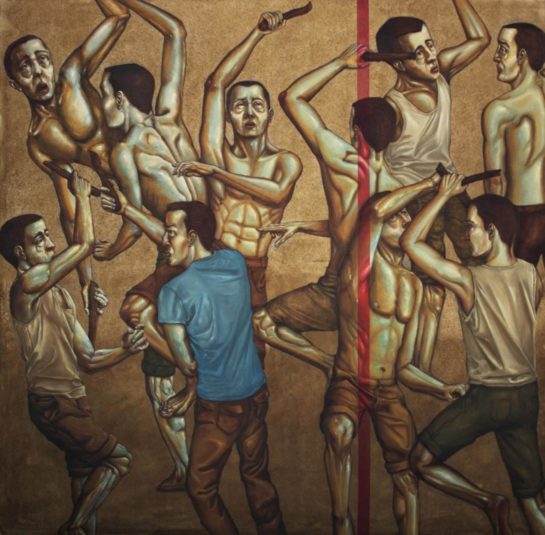
It has been a few months now that I have been working on two articles about Libyan contemporary art for the webmagazine Middle East Eye.
The first one of the two just came out. Here we look at the younger talents in the country and in the diaspora, Shefa Salem, Tewa Barnosa, Mohamed Abumeis, Malak El Ghuel and Faiza Ramadan, with the observation from gallerist and expert Najlaa Elageli from Noon Arts.
Read More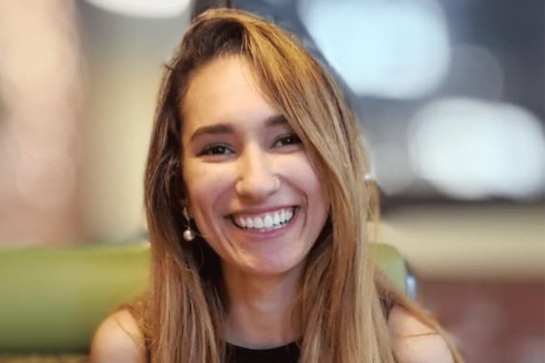
Tripoli-born art entrepreneur and educator Shatha Sbeta is very clear about her objective. “I want to bring Libyan female artists and their artworks — as well as their stories — out to the world through commerce.”
My research on Libyan contemporary art continues with an interview with Shatha Sbeta for the webmagazine Middle East Monitor.
Here is the link to the interview
Read More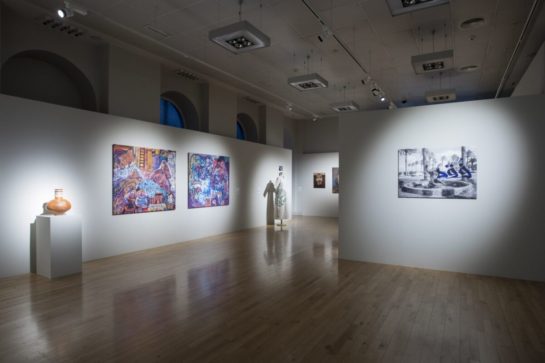
In the last couple of years I have been developing a growing fascination with the complexities of Libyan culture. While in my past I have been focused mainly on how Italian artists were looking at colonialism in Libya, now I’m starting to delve on the voices of Libyan artists themselves.
And what a better way of approaching the subject than interviewing Najlaa Elageli for Middle East Monitor. She has greatly contributed to spread the knowledge on contemporary Libyan art in the country and abroad.
Here is the link to the interview
Read More
I have recently interviewed Tunisian cartoonist Nadia Khiari for Middle East Monitor.
Khiari delivered her disillusioned humour through a cartoon cat called Willis. Appearing in magazines and on signs held aloft by protesters, Willis soon became the iconic “Cat of the Revolution”.
Here is the link to the interview
Read More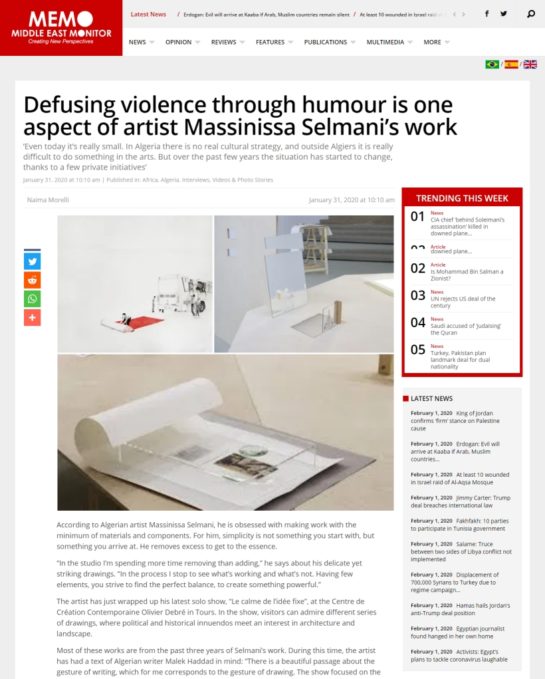
The webmagazine Middle East Monitor has just published my interview with Tours-based Algerian artist Massinissa Selmani.
The artist has just wrapped up his latest solo show, “Le calme de l’idée fixe”, at the Centre de Création Contemporaine Olivier Debré in Tours. In the show, visitors can admire different series of drawings, where political and historical innuendos meet an interest in architecture and landscape.
Here is the link to the article
Read More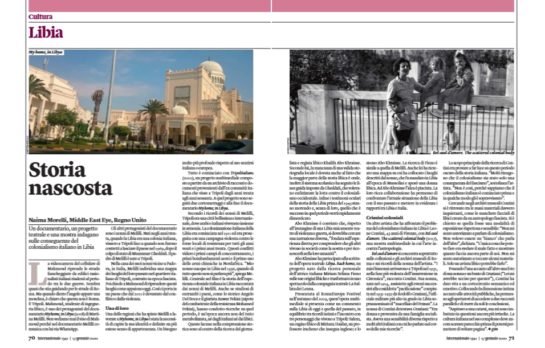
The Italian magazine Internazionale has translated and published my article on artists reflection on the responsibilities of Italian colonialism in Libya.
I originally wrote the article for Middle East Eye. It features interviews with filmaker and writer Khalifa Abo Khraisse, artist and videomaker Martina Melilli and multimedia artist Leone Contini.
Here is the pdf version of the piece
Read More
Naima Morelli is an arts writer and journalist specialized in contemporary art from Asia-Pacific and the MENA region.
She has written for the Financial Times, Al-Jazeera, The Art Newspaper, ArtAsiaPacific, Internazionale and Il Manifesto, among others, and she is a regular contributor to Plural Art Mag, Middle East Monitor and Middle East Eye as well as writing curatorial texts for galleries.
She is the author of three books on Southeast Asian contemporary art.
Reach out: contact [at] naimamorelli.com


