From art fairs to vibrant galleries, Marrakech is becoming a top spot for contemporary African art, bringing together local talent and global influences. I wrote this article on the local art scene for The New Arab.
Small but well-curated, the 1/54 art fair in Marrakech aims to be the gateway for African art, while fostering the local Moroccan art scene. I have reported on the event for Middle East Monitor.
We really don’t want to hear yet another mouth uttering the old and weary truism: “In order to know where we are going, we need to know where we come from.”
But can we even look at Massinissa Selmani’s videos, drawings, and photos in his exhibition 1000 VILLAGES—dedicated to the story of his own country Algeria and currently on exhibition at Index Foundation in Stockholm—without having this truism resounding in our ears like blaring evidence? We might as well cover our mouths.
I have spoken with the artist for FLAUNT Magazine.
While, as human beings, we are bound to never fully transcend our human-centered perspective, art offers a means to glimpse beyond our own biases and limitations, imagining a world where animals and humans interact on equal terms.
I have written an essay on the presence of animals in art for The Markaz Review.
I spoke with Moroccan artist Mehdi Qotbi who found his passion almost by chance and now, after 50 years, is being celebrated in a major exhibition in Paris at l’Institute du Monde Arabe. The piece has been published by The New Arab.
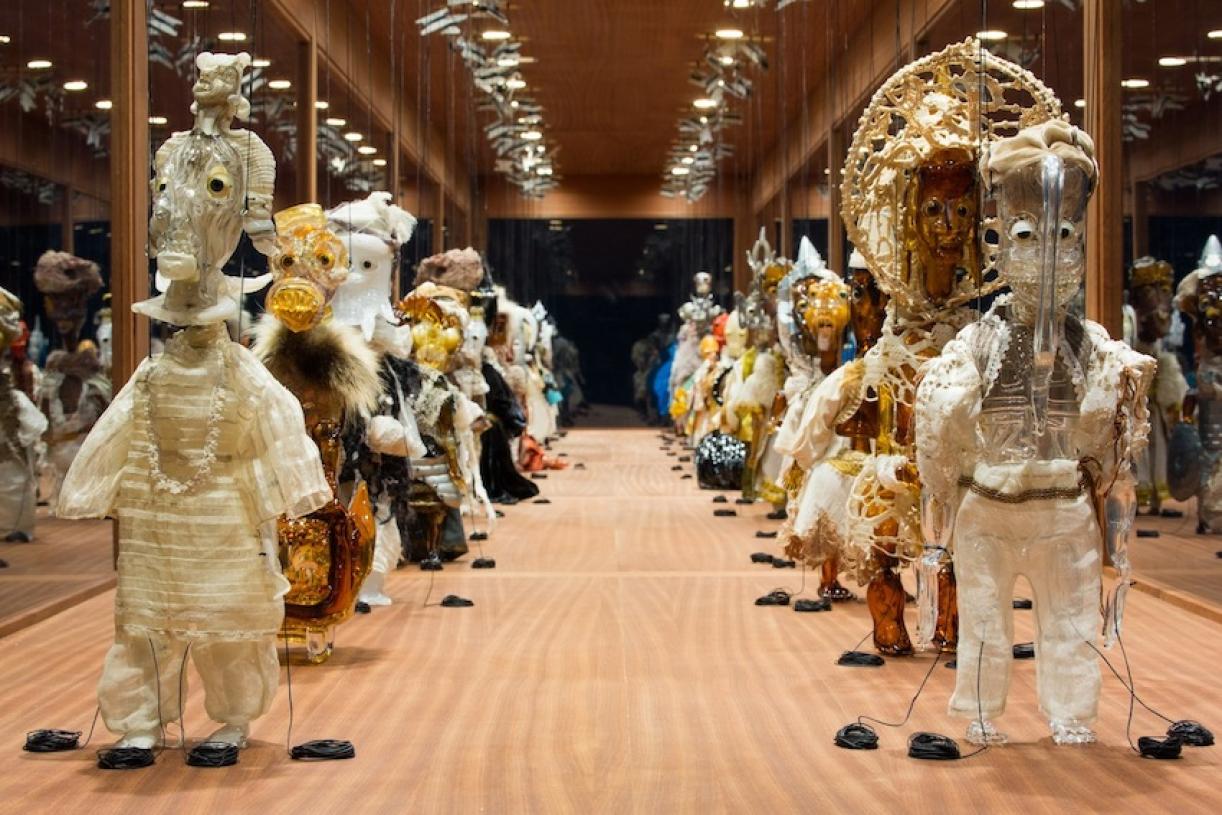
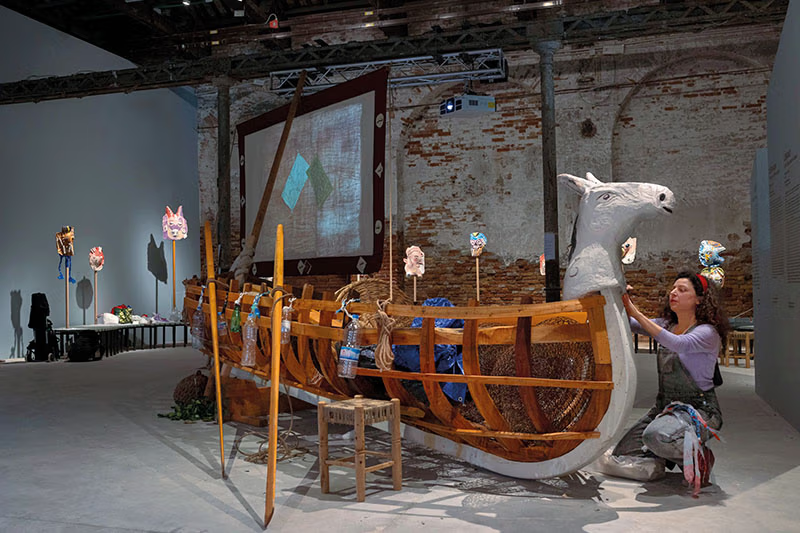
Being a foreigner is more than a state of mind. It is a state of the soul. The foreigner’s journey can be painful or enriching. Often it is both, as illustrated by a number of Arab artists at the 60th International Art Exhibition in Venice, which continues through November 24.
Stranieri Ovunque, or Foreigners Everywhere, the theme of the Biennale chosen by curator Adriano Pedrosa, subverts the linear Western art trajectory by bringing outsider narratives to the forefront. The theme allows for explorations of identity, ethnicity, gender and belonging.
I have been interested in Libyan art, culture, and literature – as well as its relationship with its Italian colonial past – for a few years now. And every time I look at this country through a different facet, there is so much to discover.
This time I looked at the erasure of the colonial architectural heritage in Benghazi and Tripoli, gathering different viewpoints from Libyans, and their memories attached to these buildings.
I wrote the story for Al-Jazeera, with the title “Cultural treasure or painful reminder? Libya’s colonial architecture.”
My latest piece for The Markaz reviw is about two exhibitions in Tripoli and Florence. These examine Libyan identity, gauging what to take and what to leave of its colonial past and its ancestral roots, while trying to make sense of the last years of civil war.
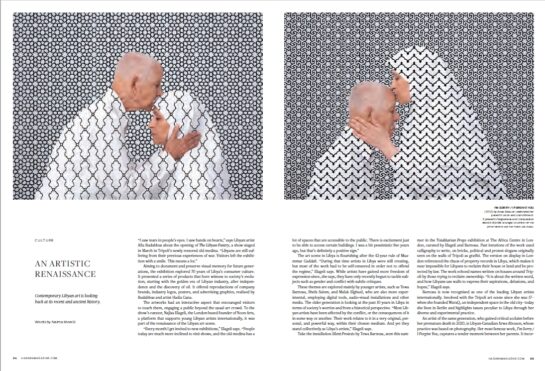
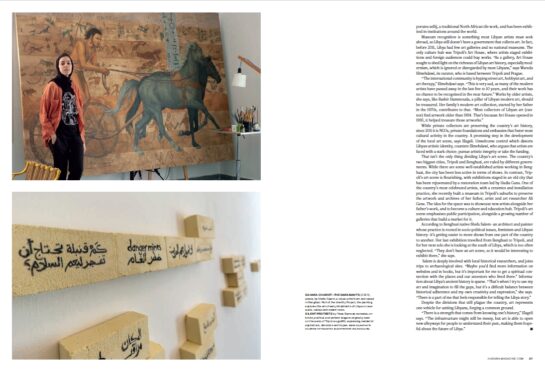
My latest story: “Contemporary Libyan art is looking back at its recent and ancient history”, has just been published on the beautiful Hadara Magazine.
I spoke with curator Najlaa Elageli, artists Tewa Barnosa, Shefa Salem and many others.
With its two leading art fairs, Paris + Art Basel and ASIA NOW, as well as exhibitions scattered around the city, Paris Art Week 2022 had an extensive presence of Middle Eastern artists and galleries, and paid strong attention to the current situation in Iran.
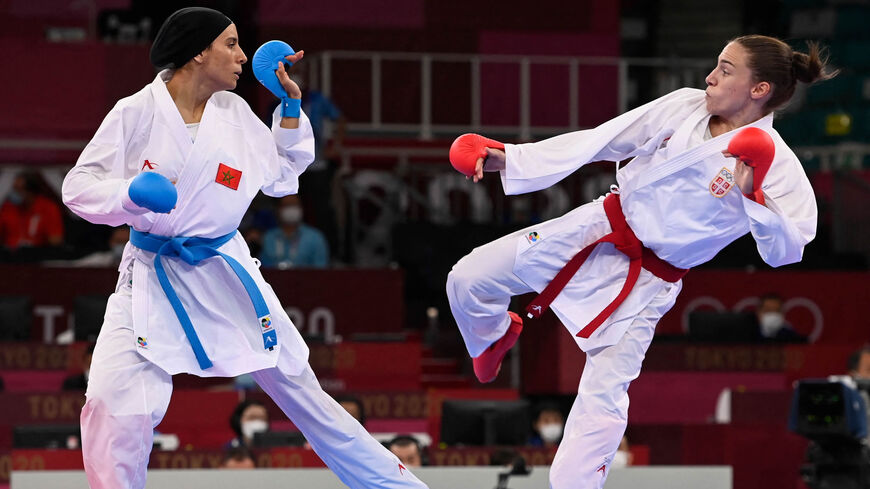
In this story for Al-Monitor I spoke with four Moroccan female martial arts athletes about cultural stereotypes and how to inspire and empower future generations of female fighters.
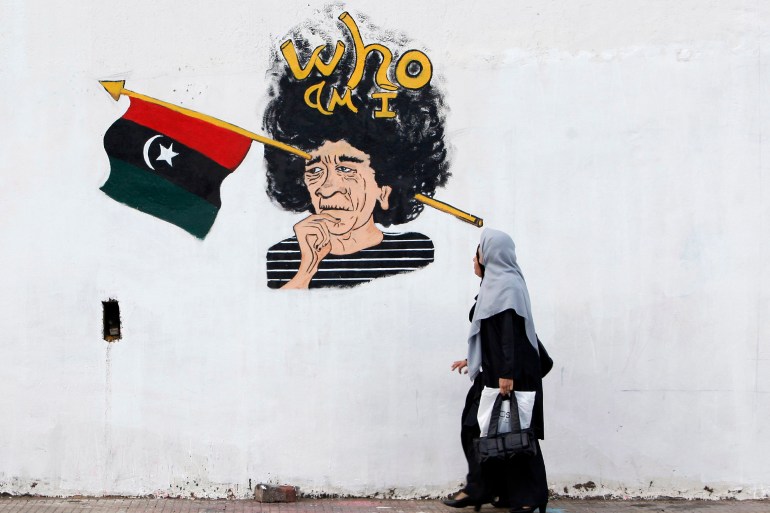
My first article for Al Jazeera has just been published. It’s called “The writers retelling Libya’s history through a feminist lens” and tells how Libya’s women novelists (but not exclusively them) are reframing the country’s stories in a post-Gaddafi era.
I worked on it for a long time, and it was very satisfying to get to write a longform piece with a bit more of a narrative style. Also, I got to know this county a little deeper, not just through its visual art but also through literature. For the piece I have interviewed, among others, writers Kawther Eljehmi, Maryem Salama, Manuela Piemonte Mahbuba Khalifa, and Mariza d’Anna, and publisher Ghassan Fergiani.
Naima Morelli is an arts writer and journalist specialized in contemporary art from Asia-Pacific and the MENA region.
She has written for the Financial Times, Al-Jazeera, The Art Newspaper, ArtAsiaPacific, Internazionale and Il Manifesto, among others, and she is a regular contributor to Plural Art Mag, Middle East Monitor and Middle East Eye as well as writing curatorial texts for galleries.
She is the author of three books on Southeast Asian contemporary art.

![1-54 Marrakech 2025. [Courtesy Mohamed Lakhdar]](https://i0.wp.com/www.middleeastmonitor.com/wp-content/uploads/2025/02/MLR57810.jpg?fit=1200%2C800&ssl=1)



![Le Monnaye de Paris, ASIA NOW’s location [Naima Morelli]](https://i0.wp.com/www.middleeastmonitor.com/wp-content/uploads/2022/10/1e6e4d869ad62566-photo-e1667220053301.jpeg?resize=1197%2C795&quality=85&strip=all&zoom=1&ssl=1)