
New article (originally in Italian, but you also have an English version) about a city which I recently visited, Helsinki. Here is my very personal guide for IFDM.
Here is the link to the article
New article (originally in Italian, but you also have an English version) about a city which I recently visited, Helsinki. Here is my very personal guide for IFDM.
Here is the link to the article

Another review of the Helsinki Biennial (in Italian with a English translation) for IFDM, sharing some more thoughts and analysis to share on a very interesting art event.
Here is the link to the article
Read More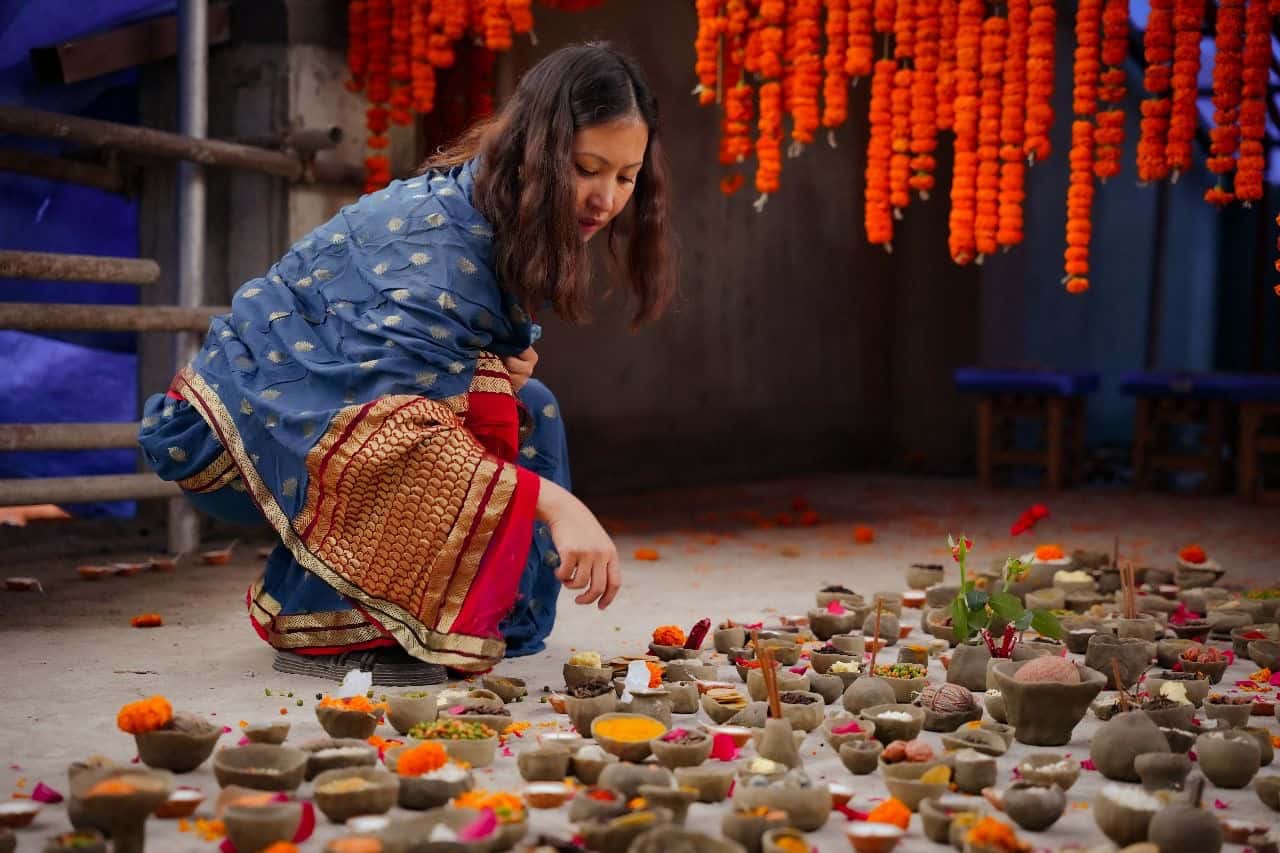
For the historically underrepresented Central Asian art market, smaller fairs represent today an important alley, more than the big fairs such as Art Basel – which just had its second Paris iteration this October. “Boutique fairs,” as they are called, often present curated programming which allow a wide public – not just collectors and buyers – to enjoy the art as it was an exhibition. A selling one, of course.
In Paris, the most relevant fair which has historically presented Central Asian artists to the European public is called Asia Now, and it took place in Paris from October 17 to 20. Entirely dedicated to Asian art, the fair has historically tried to fill the gap for Central Asian art in the European market in the past ten years of its existence.
I wrote the piece for Times of Central Asia.
Here is the link to the article
Read More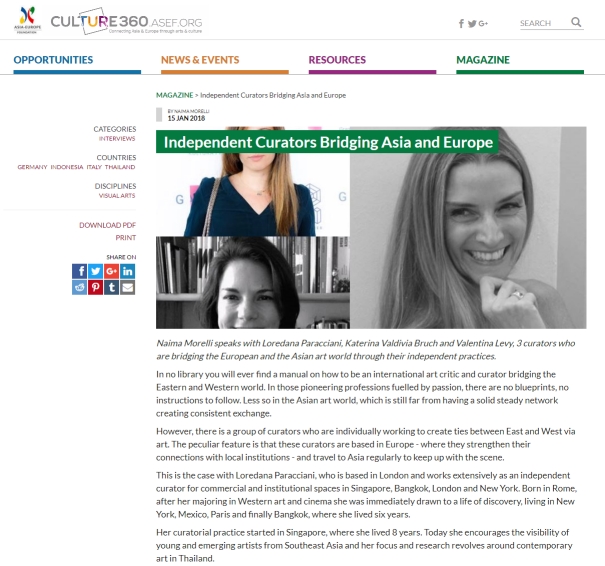
Culture360 – the webmagazine of the Asia-Europe Foundation – has just published my piece on independent curators bridging Asia and Europe (and also other parts of the world) through contemporary art.
I have met these three incredible women in several occasions; they are doing a very important and necessary work, filling gaps in understanding across cultures. Their practice and professional rigour inspires me greatly.
Read More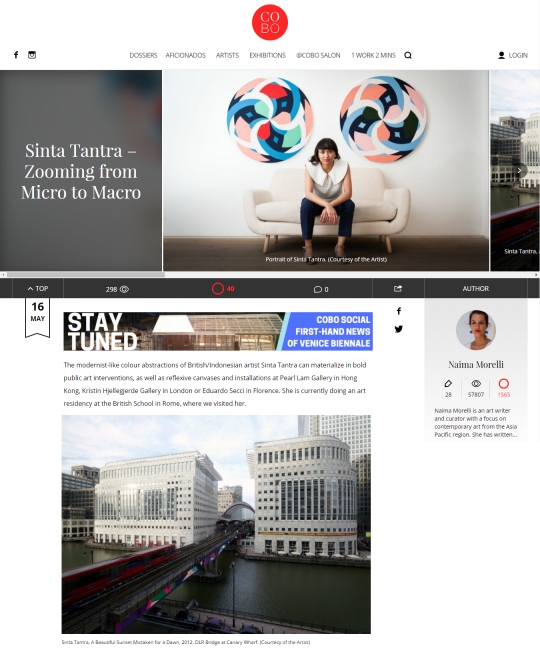
CoBo has just published my interview with British/Indonesian artist Sinta Tantra, who I visited at her studio at the British School in Rome, where she is doing a residency. As always, every interview is a chance to learn something and often times the words of artists resonate powerfully with my own life.
Here is the link to the interview
Read More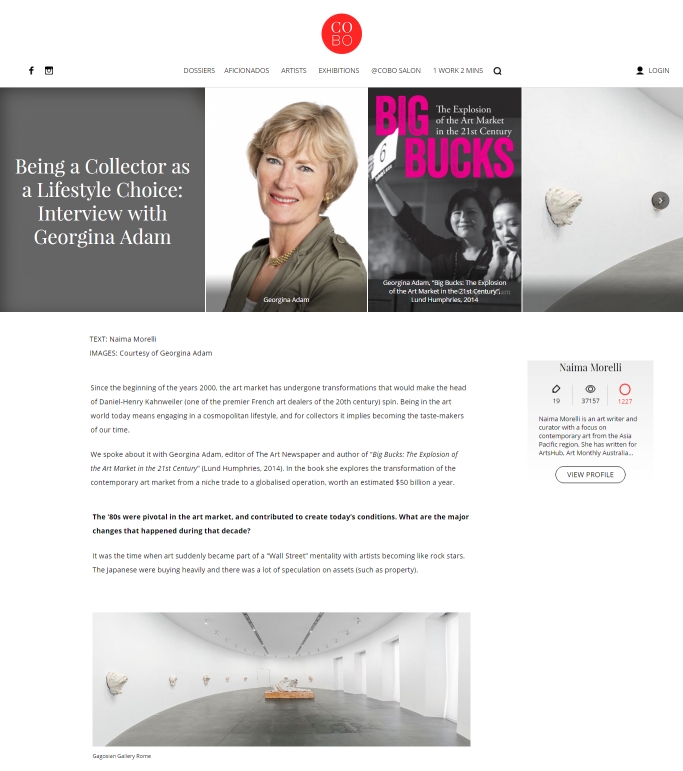
Hong-Kong based webmagazine and collector’s platform CoBo has just published my latest article called “Being a collector as a lifestyle choice: Interview with Georgina Adam”.
Writer and journalist Georgina Adam is the author of “Big Bucks: The Explosion of the Art Market in the 21st Century”, an important book which does exactly what is says on the tin: retracing the history and the main players of the art market as we see and experience it today.
We talk about what are the consequences of this market explosion for collectors, the ’80s as the decade in which everything changed and more.
Here is the link to the interview
Read More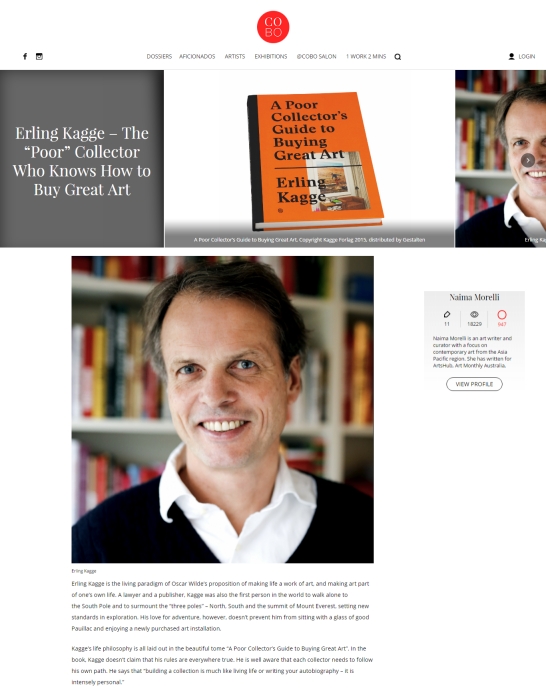
Hong Kong-based magazine CoBo has just published my interview with Norwegian art collector and adventurer Erling Kagge. There is a line of the interview that is applicable well beyond collecting, and definitely struck a chord with me: “To be an art collector you must be obsessed. It is beyond rationality and there is a bit of insanity in it. Many people have hobbies, they might collect stamps or cars. I personally don’t have hobbies, for me both expeditions, art collecting and publishing are different aspects of the same thing called “lifestyle”. I’m all in and I don’t set boundaries between my private life, my life as a collector, or as an explorer.”
I believe that this concept of “being all in” for the things you love, is what ultimately leads to a beautiful life. For me personally this state can be find in the technique; whether it is writing, the martial arts or creating stories. But it can also translate in simply deeply listening to a friend when he’s telling you about his take on Rudolf Steiner’s theories in front of a cup of coffee. It is that sense of connection with everything you have committed to do in depth. It creates a communion of ideas, people, nature, everything around us. It puts us in a network, as opposed to making us feeling disconnected.
So for me today it is not really about asking the point of doing a particular activity, but it is rather about recognizing what learning and practicing whatever type of activity or art in depth can make to your life. This goes especially for those privileged few of us which have time every now and then to incur in existential crisis. But I’m going off topic…
Read More
Naima Morelli is an arts writer and journalist specialized in contemporary art from Asia-Pacific and the MENA region.
She has written for the Financial Times, Al-Jazeera, The Art Newspaper, ArtAsiaPacific, Internazionale and Il Manifesto, among others, and she is a regular contributor to Plural Art Mag, Middle East Monitor and Middle East Eye as well as writing curatorial texts for galleries.
She is the author of three books on Southeast Asian contemporary art.
Reach out: contact [at] naimamorelli.com


