In Sweden, the country’s artists, dealers, collectors and institutions have built a functioning ecosystem that has, by most measures, avoided the worst of the recent market turbulence.
I have written about it for Observer, reviewing Stockholm’s Market Art Fair, and exploring the Stockholm Art Week for Observer.
This year, Asia at the Venice Biennale explores themes ranging from postcolonialism to contemporary spirituality, thanks to artists from countries where the art scene is now well-established—such as China and Indonesia—as well as from emerging regions that are giving rise to new narratives.
Kaïs Dhifi’s sculptural pieces reflect a balance between control and spontaneity, embracing imperfection, chance, and the history embedded in materials. In this interview Dhifi talks about his latest concept, an inverted Mediterranean.
My interview with Kaïs Dhifi is on Markaz Review, as a feature artist for the Mediterreneans issue.
A convergence is underway between the worlds of art and design – at the heart of Salone Raritas, the new section of Salone del Mobile – centered on “collectible design,” which brings together historicized design and contemporary creation. It is a new market whose dynamics closely resemble those of the art world.
I interviewed three of the protagonists of this phenomenon for the design magazine IFDM.
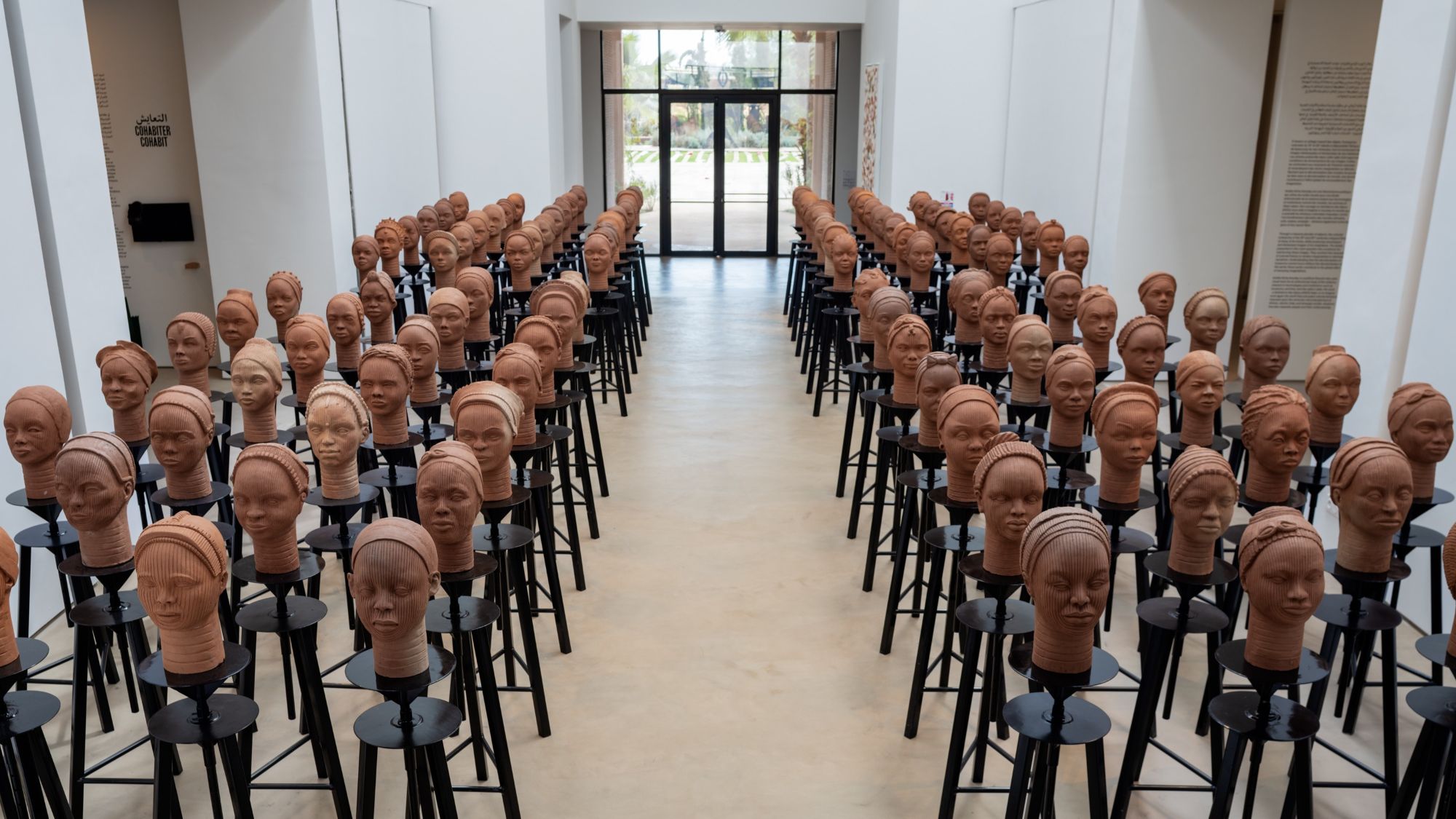
Morocco’s art scene is diverse and growing, spanning independent spaces, commercial galleries and international fairs. While Marrakech positions itself as a global hub, Casablanca’s scene is closely tied to its history and political reality.
My report from Marrakech and Casa has just been published by the German magazine Qantara.
Latest article (in French) for Le Quotidien de l’Art about independent spaces in Rome. Sometimes I got to write about my turf as well! online and in the paper edition.
“Lorsqu’on évoque l’art contemporain en Italie, Milan et Turin s’imposent comme des évidences. Rome, elle, est souvent reléguée au second plan et perçue comme périphérique. Pourtant, loin des projecteurs institutionnels et de la hype, la capitale italienne cultive une vitalité singulière, une énergie nourrie par des liens humains forts, des solidarités de terrain et un rapport avec le territoire.”
Loft Gallery director has spent nearly two decades building one of the country’s most important contemporary art spaces, while quietly assembling a collection guided entirely by instinct and love.
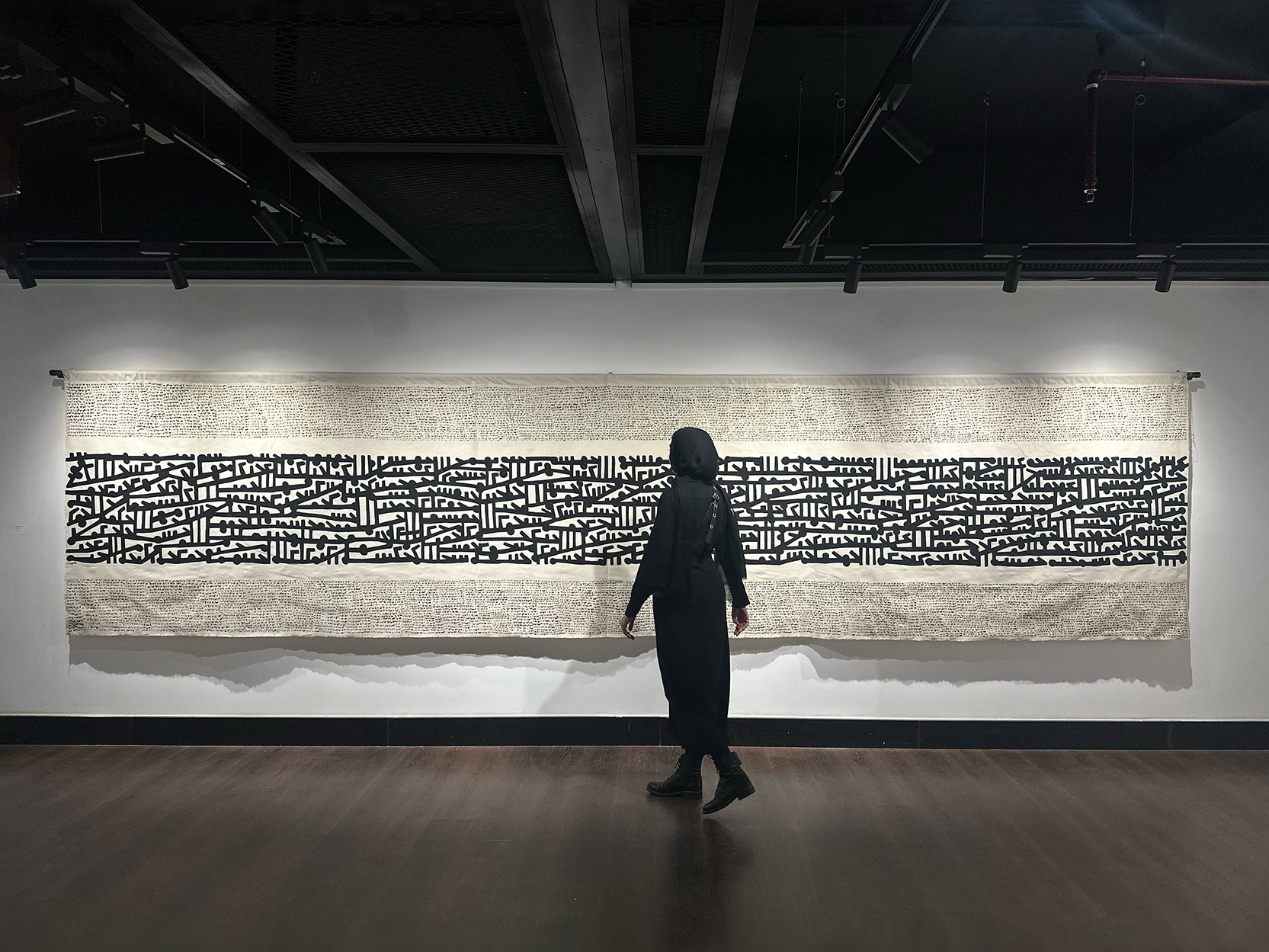
In the work of the young Egyptian artist Mariem Abutaleb , the Arabic language and alphabet become a symphony of signs that attempts to remove barriers. “When writing transcends readability, it’s meant to be felt,” says the artist. Her work is a visual demonstration of this idea.
From afar, her work looks as familiar as calligraphy, it’s only by coming close that one realizes she’s not referencing a specific language. And it’s precisely in this fluid approach that her artistic practice lies.
I have interviewed the artist for The Markaz Review.
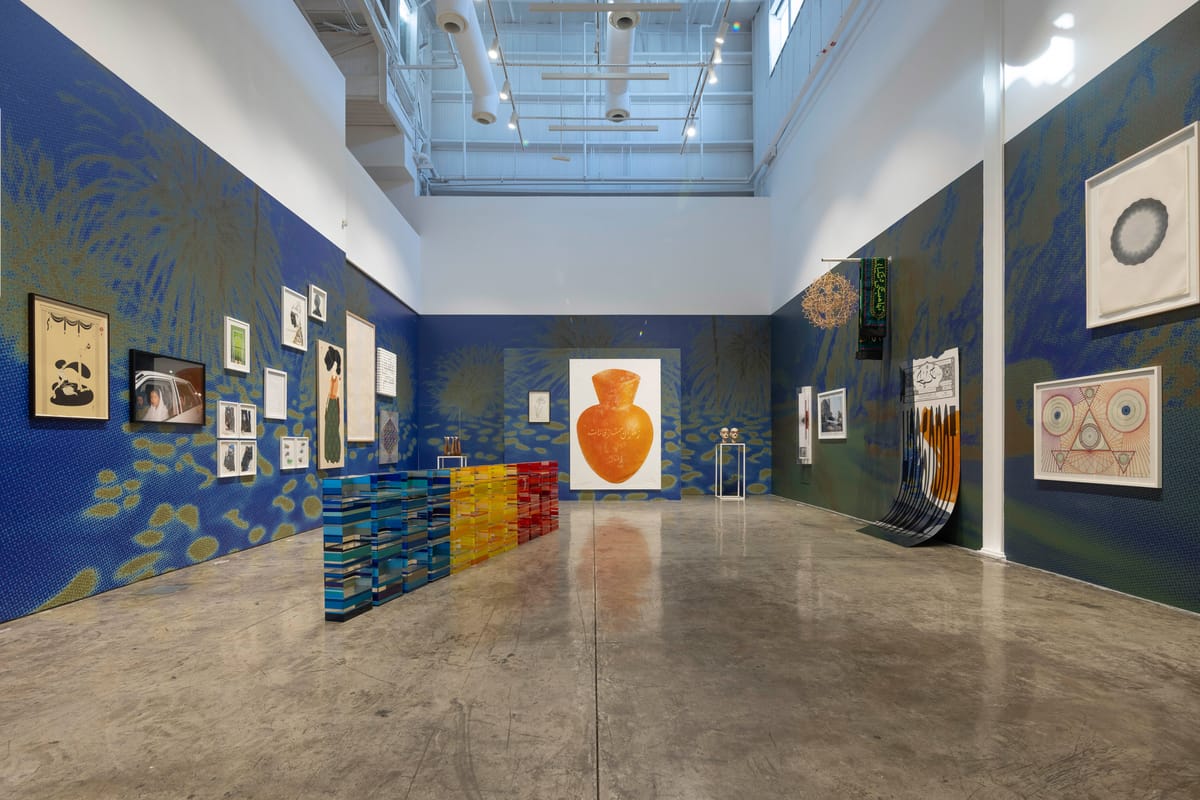
For anyone who has spent time at Alserkal Avenue, The Third Line needs little introduction. Since opening in 2005, at a moment when Dubai’s cultural infrastructure was still tentative and often viewed with skepticism, the gallery has become one of the most consistent presences in the city’s art ecology.
I saw the show and wrote a review for ArtAsiaPacific
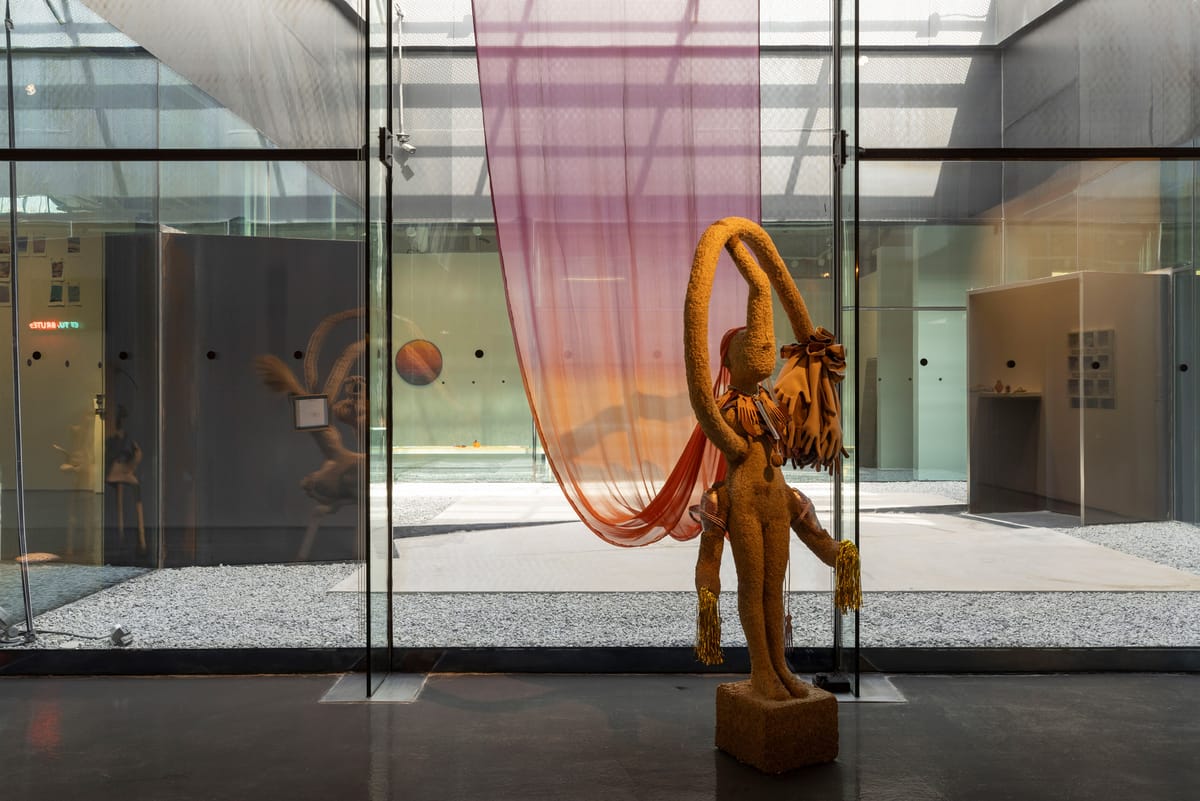
421 contradicts several preconceived ideas the West might hold about the UAE art scene, often associated with large institutions projecting national ambition outward, from the Louvre Abu Dhabi and the forthcoming Guggenheim to the Sharjah Biennial. Taking another approach, 421 operates on a smaller scale, with slower timing and direct relationships with artists.
I visited 421 Art Campus and reported for ArtAsiaPacific.
I have written a city guide of Oslo for the magazine IFDM: from the traditional houses of Grünerløkka to avant-garde architecture and contemporary design, here’s my 24-hour itinerary to uncover the many faces of a constantly evolving capital.
The 2026 edition of the 1-54 Contemporary African Art Fair Marrakech is smaller than in previous years. The number of galleries has been reduced, the fair occupies a tighter footprint and the broader media conversation has largely shifted further east.
The city itself, however, tells a different story. This year, the boutique fair operated in dialogue with exhibitions spread across the city, keeping visitors constantly engaged—if not by the energy of Marrakech itself, then by a program that extends far beyond the walls of La Mamounia, the state-of-the-art hotel where the fair takes place.
Naima Morelli is an arts writer and journalist specialized in contemporary art from Asia-Pacific and the MENA region.
She has written for the Financial Times, Al-Jazeera, The Art Newspaper, ArtAsiaPacific, Internazionale and Il Manifesto, among others, and she is a regular contributor to Plural Art Mag, Middle East Monitor and Middle East Eye as well as writing curatorial texts for galleries.
She is the author of three books on Southeast Asian contemporary art.